Monday, November 8, 2010

Twilight

Twilight
 by Stephanie Meyer

Bibliography

Meyer, S. (2005). Twilight. London, UK: Little, Brown, & Co. ISBN 0316160172

Summary
Bella Swan leaves the warmth and sunshine of Phoenix for the grayest place in the United States, so her mother can travel with her new husband.  In Forks, WA, Bella meets Edward, a very unique boy:  Unique because he's a vampire.  Twilight chronicles the first part of Bella and Edwards story as they meet, fall in love, and fight for Bella's life in more ways than one.

Critical Analysis

Twilight is sort of like a train wreck for me.  I want to look away, yet am compelled to continue reading.  Stephanie Meyer has a knack for getting the reader to suspend disbelief, but for me it only lasts as long as I am absorbed in the story.  Once I put it down, I start to pick it apart.  I just don't see the same skill as J.K. Rowling or Philip Pullman.  I think people will continue to enjoy the story, but time will tell if it has the staying power of some others.

Meyer does draw her main characters extremely well, yet they are either too admirable or too hard to admire.  Edward is too perfect, Bella is too flawed.  She is not a bad person, but her willingness to die for anything to do with Edward is off-putting.  There is also little development in the characters personalities through the story.

Twilight does have strengths, and is a mesmerizing story.  Meyer couldn't have picked a better setting, and she crafted it very well into the storyline.  Her villains are scary and also believable.  The plot carries this story:  It is one of those books that is hard to put down.  But Twilight is essentially a love story/romance that just happens to be set in a fantasy world, rather than a true fantasy novel with all its conventions and elements.


Review Excerpts

* Their love is palpable, heightened by their touches, and teens will respond viscerally. There are some flaws here--a plot that could have been tightened, an overreliance on adjectives and adverbs to bolster dialogue--but this dark romance seeps into the soul. --Ilene Cooper

* This is far from perfect: Edward's portrayal as monstrous tragic hero is overly Byronic, and Bella's appeal is based on magic rather than character. Nonetheless, the portrayal of dangerous lovers hits the spot; fans of dark romance will find it hard to resist. --Kirkus Reviews 

* Realistic, subtle, succinct, and easy to follow, Twilight will have readers dying to sink their teeth into it.-- Hillias J. Martin, New York Public Library

Connections

* You can listen to a seven minute sample from the audio version here.

* The entire Twilight Saga includes:
Twilight
New Moon
Eclipse
Breaking Dawn


* Expert from Twilight
 
    
I'd never given much thought to how I would die -- though I'd had reason enough in the last few months -- but even if I had, I would not have imagined it like this.
I stared without breathing across the long room, into the dark eyes of the hunter, and he looked pleasantly back at me.
Surely it was a good way to die, in the place of someone else, someone I loved. Noble, even. That ought to count for something.
I knew that if I'd never gone to Forks, I wouldn't be facing death now. But, terrified as I was, I couldn't bring myself to regret the decision. When life offers you a dream so far beyond any of your expectations, it's not reasonable to grieve when it comes to an end.
The hunter smiled in a friendly way as he sauntered forward to kill me


    MY MOTHER DROVE ME TO THE AIRPORT WITH THE windows rolled down. It was seventy-five degrees in Phoenix, the sky a perfect, cloudless blue. I was wearing my favorite shirt —sleeveless, white eyelet lace; I was wearing it as a farewell gesture. My carry-on item was a parka.
In the Olympic Peninsula of northwest Washington State, a small town named Forks exists under a near-constant cover of clouds. It rains on this inconsequential town more than any other place in the United States of America. It was from this town and its gloomy, omnipresent shade that my mother escaped with me when I was only a few months old. It was in this town that I'd been compelled to spend a month every summer until I was fourteen. That was the year I finally put my foot down; these past three summers, my dad, Charlie, vacationed with me in California for two weeks instead.
It was to Forks that I now exiled myself —an action that I took with great horror. I detested Forks.
I loved Phoenix. I loved the sun and the blistering heat. I loved the vigorous, sprawling city.
"Bella," my mom said to me —the last of a thousand times —before I got on the plane. "You don't have to do this."

My mom looks like me, except with short hair and laugh lines. I felt a spasm of panic as I stared at her wide, childlike eyes. How could I leave my loving, erratic, harebrained mother to fend for herself? Of course she had Phil now, so the bills would probably get paid, there would be food in the refrigerator, gas in her car, and someone to call when she got lost, but still . . .

"I want to go," I lied. I'd always been a bad liar, but I'd been saying this lie so frequently lately that it sounded almost convincing now.

"Tell Charlie I said hi."

"I will."

"I'll see you soon," she insisted. "You can come home whenever you want —I'll come right back as soon as you need me."

But I could see the sacrifice in her eyes behind the promise.

"Don't worry about me," I urged. "It'll be great. I love you, Mom."

She hugged me tightly for a minute, and then I got on the plane, and she was gone.
It's a four-hour flight from Phoenix to Seattle, another hour in a small plane up to Port Angeles, and then an hour drive back down to Forks. Flying doesn't bother me; the hour in the car with Charlie, though, I was a little worried about.

Charlie had really been fairly nice about the whole thing. He seemed genuinely pleased that I was coming to live with him for the first time with any degree of permanence. He'd already gotten me registered for high school and was going to help me get a car.

But it was sure to be awkward with Charlie. Neither of us was what anyone would call verbose, and I didn't know what there was to say regardless. I knew he was more than a little confused by my decision —like my mother before me, I hadn't made a secret of my distaste for Forks.

When I landed in Port Angeles, it was raining. I didn't see it as an omen —just unavoidable. I'd already said my goodbyes to the sun.

Charlie was waiting for me with the cruiser. This I was expecting, too. Charlie is Police Chief Swan to the good people of Forks. My primary motivation behind buying a car, despite the scarcity of my funds, was that I refused to be driven around town in a car with red and blue lights on top. Nothing slows down traffic like a cop.

Charlie gave me an awkward, one-armed hug when I stumbled my way off the plane.

"It's good to see you, Bells," he said, smiling as he automatically caught and steadied me. "You haven't changed much. How's Renée?"

"Mom's fine. It's good to see you, too, Dad." I wasn't allowed to call him Charlie to his face.
I had only a few bags. Most of my Arizona clothes were too permeable for Washington. My mom and I had pooled our resources to supplement my winter wardrobe, but it was still scanty. It all fit easily into the trunk of the cruiser.

"I found a good car for you, really cheap," he announced when we were strapped in.

"What kind of car?" I was suspicious of the way he said "good car for you" as opposed to just "good car."

"Well, it's a truck actually, a Chevy."

"Where did you find it?"

"Do you remember Billy Black down at La Push?" La Push is the tiny Indian reservation on the coast.

"No."

"He used to go fishing with us during the summer," Charlie prompted.

That would explain why I didn't remember him. I do a good job of blocking painful, unnecessary things from my memory.

"He's in a wheelchair now," Charlie continued when I didn't respond, "so he can't drive anymore, and he offered to sell me his truck cheap."

"What year is it?" I could see from his change of expression that this was the question he was hoping I wouldn't ask.

"Well, Billy's done a lot of work on the engine —it's only a few years old, really."

I hoped he didn't think so little of me as to believe I would give up that easily. "When did he buy it?"

"He bought it in 1984, I think."

"Did he buy it new?"

"Well, no. I think it was new in the early sixties —or late fifties at the earliest," he admitted sheepishly.

"Ch —Dad, I don't really know anything about cars. I wouldn't be able to fix it if anything went wrong, and I couldn't afford a mechanic. . . ."

"Really, Bella, the thing runs great. They don't build them like that anymore."

The thing, I thought to myself . . . it had possibilities —as a nickname, at the very least.

"How cheap is cheap?" After all, that was the part I couldn't compromise on.

"Well, honey, I kind of already bought it for you. As a homecoming gift." Charlie peeked sideways at me with a hopeful expression.

Wow. Free.

The Golden Compass

The Golden Compass
 by Philip Pullman

Bibliography

Pullman, P. (1995, 2005). The golden compass: His dark materials, book 1 (Deluxe 10th anniversary edition). New York, NY: Alfred A. Knopf. ISBN 0375838309

Summary

The Golden compass is the first of a three part epic tale and tells of Lyra's extra-ordinary adventures in a world so nearly our own but with fantastical differences!  Lyra must leave her beloved, cozy, if not exactly perfect, life to travel with her daemon, gypsies, an aeronaut, witches, and a very special bear to save children, make a delivery, and unbeknownst to her, commit a great betrayal.  Along the way she learns to use the golden compass.

Critical Analysis

Philip Pullman's greatest talent in this book is getting the reader to suspend disbelief.  He does this by creating a world believable because it is so nearly true, yet fantastic because of the parts that are clearly a world of fancy.  No small part of this great achievement is the creation of his heroine, Lyra, and other characters we grow to cherish.  Lyra is every child, yet no one's child.   She is lovable and mischievous, but by the end of the story, she is strong and righteous. She is special because she has the power to understand the compass.   Other characters are also developed with truly human strengths and weaknesses, even if they are not human.

Universal themes common to fantasy novels abound in The Golden Compass.  There is the traditional quest, good versus evil, and the heroine certainly gains self-knowledge through the adventure.  Philip Pullman manages to combine all of this into a readable, sometimes exciting novel where horrific evil must be conquered and life and death battles occur.  The ending, however, should be called "The Beginning," and characters the reader believes are villains exchange places several times through the story and may change several more times in the next books.


Review Excerpts

* In The Golden Compass, Philip Pullman has written a masterpiece that transcends genre. It is a children's book that will appeal to adults, a fantasy novel that will charm even the most hardened realist. Best of all, the author doesn't speak down to his audience, nor does he pull his punches; there is genuine terror in this book, and heartbreak, betrayal, and loss. There is also love, loyalty, and an abiding morality that infuses the story but never overwhelms it. This is one of those rare novels that one wishes would never end. --Alix Wilber

* This is a captivating fantasy, filled with excitement, suspense, and unusual characters.... There is some fine descriptive writing, filled with the kind of details that encourage suspension of disbelief. The story line moves along at a rapid clip, but flags when it delves into philosophical matters. The ending is less than satisfying, but serves as a lead-in to part two of the series. --School Library Journal


Connections

* Expert from The Golden Compass
 
     After darkness had fallen, and when the stores and equipment had all been safely unloaded and stood in waiting on the quay, Farder Coram and Lyra walked along the waterfront and looked for Einarsson's Bar. They found it easily enough: a crude concrete shed with a red neon sign flashing irregularly over the door and the sound of loud voices through the condensation-frosted windows.
     A pitted alley beside it led to a sheet-metal gate into a rear yard, where a lean-to shed stood crazily over a floor of frozen mud. Dim light through the rear window of the bar showed a vast pale form crouching upright and gnawing at a haunch of meat which it held in both hands. Lyra had an impression of blood-stained muzzle and face, small malevolent black eyes, and an immensity of dirty matted yellowish fur. As it gnawed, hideous growling, crunching, sucking noises came from it.
Farder Coram stood by the gate and called:
     "Iorek Bymison!"
     The bear stopped eating. As far as they could tell, he was looking at them directly, but it was impossible to read any expression on his face.
     "Iorek Byrnison," said Farder Coram again. "May I speak to you?"
     Lyra's heart was thumping hard, because something in the bear's presence made her feel close to coldness, danger, brutal power, but a power controlled by intelligence; and not a human intelligence, nothing like a human, because of course bears had no daemons. This strange hulking presence gnawing its meat was like nothing she had ever imagined, and she felt a profound admiration and pity for the lonely creature.
      He dropped the reindeer leg in the dirt and slumped on all fours to the gate. Then he reared up massively, ten feet or more high, as if to show how mighty he was, to remind them how useless the gate would be as a barrier, and he spoke to them from that height.
     'Well? Who are you?'

* You can listen to a sample from the audio version on Philip Pullmans website.  There are also other things to explore on the site.  Check it out here.

* His Dark Materials Trilogy includes:
The Golden Compass
The Subtle Knife
The Amber Spyglass

Monday, October 25, 2010

Curse of the Blue Tattoo

Curse of the Blue Tattoo
 by L. A. Meyer

Bibliography

Meyer, L. A. (2004). Curse of the blue tattoo. Orlando, FL: Harcourt Books. ISBN 9781415545881

Summary

Discovered!  Jack is really Jacky and so must leave the ship she loves and become a fine lady.  This doesn't work out and the adventures really begin for Jacky Faber.  Experience penny-whistle playing, colonial boarding school drama, a nefarious preacher, and lots of excitement in this Bloody Jack adventure.

Critical Analysis

Who doesn't love a good historical yarn, especially one as well written as this one?  Meyer deftly creates well-rounded characters both heroine, minor characters, and villains.  Of course Jacky has her flaws, don't we all, but you can't help but root for her with her resourceful ways and cleverness.  Set in colonial days in America, Curse of the Blue Tattoo, takes the reader back in time and allows us to glimpse the past, but not at the expense of the strongly plotted story.  Everything feels of-a-piece - the setting, the characters, and the plot - and blends into a fantastic adventure tale with a little mystery mixed in.  Really enjoyable to read and will keep teen readers up late to find out what happens next.

Review Excerpts

*Utterly engaging and incredibly well-paced, Curse of the Blue Tattoo is the very best kind of historical fiction: the kind that won’t leave teens snoring. Meyer effortlessly maintains Jacky’s sassy voice and conflicted conscience in what is shaping up to be a great series. While many readers will groan with despair as Jacky sets off yet again at the end of the book, they will also sigh with relief that they will most likely be meeting her again! --Jennifer Hubert

* Meyer does an excellent job of conveying life in Boston in 1803, particularly the rights, or lack thereof, of women. Jacky's headstrong certainty that she's in control and her cocky first-person account make her a memorable heroine. The narrative is full of lecherous men, and Jacky herself is free in her ways. This fact and the sometimes-strong language make this book more appropriate for older readers. Sure to please fans of the first title, this adventure-packed historical novel also stands on its own. --School Library Journal


Connections

* Expert from Curse of the Bloody Tattoo

It was a hard comin' I had of it, that's for sure. It was hard enough comin' up from the brig, the cell down below where they had me kept these past few weeks, squintin' into the light to see all of the dear Dolphin's sailors lined up along the spars of the great masts and in other parts of the riggin', all four hundred of 'em, bless 'em, my mates for the past year and a half, all cheerin' and hallooin' and wavin' me off. 

It was hard, too, walkin' across to the quarterdeck, where the officers were all pulled up in their fancy uniforms and where the midshipmen and side boys made two rows for me to walk between on my way off the ship, and there's Jaimy all straight and all beautiful in his new midshipman's uniform, and there's Davy and Tink and Willy, the boys of the Brotherhood to which I so lately belonged, and there's my dear sea-dad Liam lookin' as proud as any father. The Bo'sun's Mate puts his pipe to his lips and starts the warble to pipe me off the Dolphin, my sweet and only home, and I start down between their ranks, but I stop in front of Jaimy and I look at the Captain and I pleads with my teary eyes. The Captain smiles and nods and I fling my arms around Jaimy's neck and kiss him one last time, oh yes I do, and the men cheer all the louder for it, but it was short, oh so short, for too soon my arm is taken and I have to let go of Jaimy, but before I do I feel him press something into my hand and I look down and see that it's a letter. 

Then I'm led away down the gangway, but I keep my eyes on Jaimy's eyes and my hand clutched around his letter as the Professor hands me up into the carriage that's waitin' at the foot of the gangway. I keeps my eyes on Jaimy as the horses are started and we clatter away, and I rutch around in my seat and stick my head out the window to keep my blurry eyes on him but it's too far away now for me to see his eyes, just him standin' there at the rail lookin' after me, and then the coach goes around a corner and that's all. He's there, and then he's not.That was the hardest of all. I put my fingertips to my lips where his have just been and I wonder when they will again touch me in that place. If ever...Oh, Jaimy, I worry about you so much 'cause the war's on again with Napolon and all it takes is one angry cannonball, and oh, God, please.

I leave off what has up to now been fairly gentle weeping and turn to full scale, chest heavin', eyes squeezed shut, open mouth bawlin'."Well," says Professor Tilden, sittin' across from me, "you certainly have made a spectacle of yourself today, I must say."

...don't care don't care don't care don't care...

"You should compose yourself now, Miss. The school is not a far ride from the harbor. Here," he says, handing me a handkerchief, "dry your eyes."The Professor is taking me to the Lawson Peabody School for Young Girls, which is where they decided to dump me after that day on the beach when my grand Deception was blown out of the water for good and ever...


* Lots of fun on this Bloody Jack website, even some out-takes!

* Of course you want to read the whole series.

Bloody Jack Adventures
1. Bloody Jack: Being an Account of the Curious Adventures of Mary 'Jacky' Faber, Ship's Boy (2002)
2. Curse of the Blue Tatoo: Being an Account of the Misadventures of Jacky Faber, Midshipman And Fine Lady (2004)
3. Under the Jolly Roger: Being an Account of the Further Nautical Adventures of Jacky Faber (2005)
4. In the Belly of the Bloodhound: Being an Account of a Particularly Peculiar Adventure in the Life of Jacky Faber (2006)
5. Mississippi Jack: Being an Account of the Further Waterborne Adventures of Jacky Faber, Midshipman, Fine Lady, And Lily of the West (2007)
6. My Bonny Light Horseman (2008)
7. Rapture of the Deep (2009)
8. The Wake of the Lorelei Lee (2010)
Bloody Jack: Being an Account of the Curious Adventures of Mary 'Jacky' Faber, Ship's BoyCurse of the Blue Tatoo: Being an Account of the Misadventures of Jacky Faber, Midshipman And Fine LadyUnder the Jolly Roger: Being an Account of the Further Nautical Adventures of Jacky FaberIn the Belly of the Bloodhound: Being an Account of a Particularly Peculiar Adventure in the Life of Jacky Faber
Mississippi Jack: Being an Account of the Further Waterborne Adventures of Jacky Faber, Midshipman, Fine Lady, And Lily of the WestMy Bonny Light HorsemanRapture of the DeepThe Wake of the Lorelei Lee

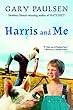
Harris and Me

Harris and Me
 by Gary Paulsen


Harris and MeBibliography

Paulsen, G. (1993). Harris and me. Orlando, FL: Harcourt Books. ISBN 9780152058807

Summary

Harris and Me is the hilarious remembrance of one boy's summer spent with Harris and his family because his parents are unfit to care for him.  The boys spend the summer playing and working outdoors, getting into mischief, and loving life.  Two of the crazy things the boys try are playing war with pigs and putting a motor on a bicycle, but no one can tell these adventures like Gary Paulsen!

Critical Analysis

Oh, I wish I knew these boys from the early 1900's!  Gary Paulsen creates a whole believable family, but the boys are perfectly crafted into real people.  Maybe that's because this book is partially autobiographical, but Paulsen brings such a fullness with his writing that I bet the story is better than the memories.  Paulsen makes a harsh reality, drunken parents, palatable for his young hero and readers.  Most will long for days when such a summer, spent on farm full of love, work, and craziness, was possible.  Rich characterization, the perfect setting, and fantastically funny writing come together in Harris and Me to make a modern classic in young adult literature


Review Excerpts

* Readers will experience hearts as large as farmers' appetites, humor as broad as the county landscape and adventures as wild as boyhood imaginagtions... A hearty helping of old-fashioned, rip-roaring entertainment.  -- Publishers Weekly

* Includes laugh-out-loud passages as well as heaps of nostalgia. --The Horn Book


Connections

* Video interview with Gary Paulsen - worth a watch, certainly - and other Paulsen stuff!

* Here is an excellent author interview with Paulsen from the New York Public Library.

* Comment from Harrison, age 13:  "I like it because it has an old-fashioned air and plenty of humor."

* Expert from Harris and Me

    All this time Harris had been standing, watching, his hands behind him.  I hadn't really looked at him, but when I moved to take the box from Glennis the grown-ups fell in together and started walking toward the house and Harris came up alongside me just as I grabbed the box.
     Physically he was of a set piece with Glennis.  Blond - hair bleached white by  sun -  face perpetually sunburned and red with a peeling nose, freckles sprinkled like brown pepper over everything, and even, white teeth, except that when Harris smiled there were two gone from the front.  He was wearing a set of patched bib overalls.  No shirt, no shoes - just freckles and the bibs, which were so large he seemed to move inside them.
    "Hi."
    He walked beside me, his hands still to his rear.  I would subsequently find that this posture could be dangerous, meant he was hiding something, but I didn't know this soon so I nodded.  "Hi."
     "We heard your folks was puke drunks, is that right?"
     "Harris!"  Glennis was was walking on the other side of me and her voiced snapped.  "That's not polite, to talk that way."
     "Well you can just blow it out your butt, you old cow...."

I'd Tell You I Love You, But Then I'd Have to Kill You


I'd Tell You I Love You, But Then I'd Have to Kill You
by Ally Carter

Bibliography

Carter, A. (2006). I'd tell you I love you, but then I'd have to kill you. New York, NY: Hperion Books for Children. ISBN 1423100034

Summary

Gallagher Academy is not a typical girls' boarding school; and Cammie is not a typical girl!  I'd Tell You I Love You, But Then I'd Have to Kill You is written as Cammie's first Covert Operations Report and details her adventures of spying and flirting during her sophomore year at Gallagher, a school for genius future spies.

Critical Analysis

Ally Carter makes a good effort with I'd Tell You I Love You, But Then I'd Have to Kill You and there are lots of good things about it.  The idea behind the plot of the story feels fresh and original.  The characters are likable and very well crafted - not too perfect and accurately complex. Several themes of the story - love may be worth it, be true to yourself, smart girls are great, bad things happen to good people - come through loud and clear, but without leaving the reader feeling like they sat through a lecture.  The setting is fun.  An all-girl spy school with secret passages, cute teachers, great friends is a combination that just sings of adventurous things to come.  All of these are good things.

Unfortunately, Carter's style in this books leaves something to be desired. The constant attempts and speaking in the teen voice left me disappointed and tired.  Her repetitive reminders of the spy nature of the book seemed to take the place of any real adventure, other than sneaking out of school and into a boy's home. Overall, I say the book is worth reading, because Carter seems to find her voice later in the series, and I like to start at the beginning!


Review Excerpts

* Despite any shortcomings, aficionados of this burgeoning fiction genre will be tempted to give this title a go. -- Publisher's Weekly

* The teen's double life leads to some amusing one-liners, and the invented history of the Gallagher Girls is also entertaining, but the story is short on suspense. The stakes never seem very high since there are no real villains, and the cutesy dialogue quickly becomes grating. --School Library Journal

Connections

* There are many Gallagher Girls books to enjoy!  Look for Cross My Heart and Hope to Spy, Don't Judge a Girl by her Cover, and Only the Good Spy Young

* Here is the official Ally Carter website where you can buy a T-shirt, read Ally's blog, and get all the news!

* Excerpt from I'd Tell You I Love You, But Then I'd Have to Kill You.

17:55 hours (that's 5:35 P.M.): The Operative moved into position.
18:00 hours:  The Operative was wishing she'd brought something to eat because she couldn't leave her post to go buy a candy bar, much less use the bathroom.
18:30 hours:  The Operative realized it's almost impossible to look pretty and/or seductive if you SERIOUSLY have to go pee.


     Back in my room, I had fifty pages of The Art of War left to translate into Arabic, a credit-card-slash-fingerprint modifier to perfect for Dr. Fibs, and Madame Dabney had been dropping big pop-quiz hints at the end of C&A.  Yet there I was, rubbing my swelling ankle and thinking that I really should be getting CoveOps extra credit for this.
     I looked at my watch again: seven forty-five.  Okay, I though, I'll give him until eight and then...
     "Hi," I heard from behind me...
     I could have said hi back in fourteen different languages (and that's not including pig Latin). And yet  I was speechless as he came to stand in front of me.

Saturday, October 2, 2010

Speak

Speak
 by Laurie Halse Anderson

Bibliography

Anderson, L. H. (1999). Speak. New York, NY: Farrar, Straus, Giroux. ISBN 0374371520

Summary

Melinda Sordino was raped over the summer, but no one knows that is why she called the police to a wild party.  All they know is that she got a lot of people in trouble and she no longer has any friends.  Speak is the first person account of Melinda's struggle to find her voice after remaining silent about the rape.  She barely manages high school as she hopes that by not speaking, the pain will go away. She finds that speaking out is the only way to help herself and others.

Critical Analysis

The setting takes a back seat in this story, which is driven by rich characterization of Melinda Sordino and an engaging problem.   In Speak, which takes place primarily in Melinda's home and high school, Laurie Halse Anderson makes the point that internalizing traumatic experiences doesn't make them go away.  She does this without being preachy or exaggerating the problem.  In fact, many teenagers who have a guilty secret will be able to identify with Melinda, even if they have not experienced pain at the same level.  My only qualm with story is the coincidental timing of the volleyball team coming by when Melinda is trapped in "her" closet by Andy at the end of the book. Even with this quirk, the plot is well-built and authentic; the main and supporting characters are genuine and believable; and Anderson's writing suits the novel with seeming effortlessness.


Review Excerpts

* In a stunning first novel, Anderson uses keen observations and vivid imagery to pull readers into the head of an isolated teenager.  -- Publishers Weekly

* Anderson perfectly captures the harsh conformity of high-school cliques and one teen's struggle to find acceptance from her peers. --Booklist


Connections

* Speak has been made into a movie starring Kristen Stewart.

* Here Laurie Halse Anderson reads a poems she wrote in response to teen letters about Speak on it's 10th anniversary.

* Expert from Speak

      I am Outcast.
      There is no point looking for my ex-friends. Our clan, the Plain Janes, has splintered and the pieces are being absorbed by rival factions. Nicole lounges with the Jocks, comparing scars from summer league sports. Ivy floats between the Suffering Artists on one side of the aisle and the Thespians on the other. She has enough personality to travel with two packs. Jessica has moved to Nevada. No real loss. She was mostly Ivy's friend, anyway.
      The kids behind me laugh so loud I know they're laughing about me. I can't help myself. I turn around. It's Rachel, surrounded by a bunch of kids wearing clothes that most definitely did not come from the EastSide Mall. Rachel Bruin, my ex-best friend. She stares at something above my left ear. Words climb up my throat. This was the girl who suffered through Brownies with me, who taught me how to swim, who understood about my parents, who didn't make fun of my bedroom. If there is anyone in the entire galaxy I am dying to tell what really happened, it's Rachel. My throat burns.
      Her eyes meet mine for a second. "I hate you," she mouths silently. She turns her back to me and laughs with her friends. I bite my lip. I am not going to think about it. It was ugly, but it's over, and I'm not going to think about it. My lip bleeds a little. It tastes like metal. I need to sit down.
      I stand in the center aisle of the auditorium, a wounded zebra in a National Geographic special, looking for someone, anyone, to sit next to. A predator approaches: gray jock buzz cut, whistle around a neck thicker than his head. Probably a social studies teacher, hired to coach a blood sport.
Mr. Neck: "Sit."
      I grab a seat. Another wounded zebra turns and smiles at me. She's packing at least five grand worth of orthodontia, but has great shoes. "I'm Heather from Ohio," she says. "I'm new here. Are you?" I don't have time to answer. The lights dim and the indoctrination begins.


    THE FIRST TEN LIES THEY TELL YOU IN HIGH SCHOOL
1. We are here to help you.
2. You will have enough time to get to your class before] the bell rings.]
3. The dress code will be enforced.
4. No smoking is allowed on school grounds.
5. Our football team will win the championship this year.
6. We expect more of you here.
7. Guidance counselors are always available to listen.
8. Your schedule was created with your needs in mind.
9. Your locker combination is private.
10. These will be the years you look back on fondly.

Friday, October 1, 2010

Angus, Thongs and Full-frontal Snogging
by Louise Rennison

Bibliography

Rennison, L. (1999). Angus, thongs and full-frontal snogging. New York, NY: Harper Collins Children's Books. ISBN0060288140

Summary

Written as a diary from August 23 to July 17, Angus, Thongs and Full-frontal Snogging hilariously captures Georgia Nicolson's thoughts on her cat, boys, family, and friends.  A mirthful "glossary" at the end helps American readers with all the British-isms scattered through the book.  

Critical Analysis

What makes this book funny?  First, Georgia Nicolson is portrayed as such a typical, unintentionally witty, and sincere teenager that all the things girls laugh at about themselves and each other are just waiting to make you snicker.  Second, Louise Rennison's style and approach keep the tone light, even when the subjects turn serious, while moving the believable plot along at an attention-keeping pace.  She helps girls laugh at those miserable, embarrassing spots on their noses, the horrible feeling of bras riding up to necks, and the mysterious creatures called boys!
 
Set in England, the story rings true.  Watch any term time morning and you will see children going to school in uniforms similar to Georgia's, all tugging at this bit or that. Rennison leaves the reader wanting more Georgia, not only because she's funny and we want to know if she moves to New Zealand, but because it is inspiring and even moving to see how she handles life's daily (minutely?) ups-and-downs.

Review Excerpts

* This "fabbity, fab, fab" novel will leave readers cheering, "Long live the teen!" -- Booklist

* It will take a sophisticated reader to enjoy the wit and wisdom of this charming British import, but those who relish humor will be satisfied. Fresh, lively, and engaging. --School Library Journal

Connections

* There are many Georgia Nicolson books to enjoy!  Here they are along with other books by Louise Rennison. And here is the movie version.

* And here is the official Georgia Nicolson website!

* Excerpt from Angus, Thongs and Full-frontal Snogging:


Sunday August 23 rd
my bedroom
raining
10.00 am
Dad had Uncle Eddie round so naturally they had to come and nose around and see what I was up to. If Uncle Eddie (who is bald as a coot -- two coots, in fact) says to me one more time, "Should bald heads be buttered?" I may kill myself. He doesn't seem to realize that I no longer wear romper-suits. I feel like yelling at him, "I am fourteen years old, Uncle Eddie! I am bursting with womanhood, I wear a bra! OK, it's a bit on the loose side and does ride up round my neck I if run for the bus "but the womanly potential is there, you bald coot!"
Talking of breasts, I'm worried that I may end up like the rest of the women in my family, with just the one bust, like a sort of shelf affair. Mum can balance things on hers when her hands are full--at parties, and so on, she can have a sandwich and drink and save a snack for later by putting it on her shelf. It's very unattractive. I would like a proper amount of breastiness but not go too far with it, like Melanie Andrews, for instance. I got the most awful shock in the showers after hockey last term. Her bra looks like two shopping bags. I suspect she is a bit unbalanced hormonally. She certainly is when she tries to run for the ball. I thought she'd run right through the fence with the momentum of her bosoomers' as Jas so amusingly calls them.

still in my room
still raining
still Sunday

 11.30 am
I don't see why I can't have a lock on my bedroom door. I have no privacy; it's like Noel's House Party' in my room. Every time I suggest anything around this place people start shaking their heads and tutting. It's like living in a house full of chickens dressed in frocks and trousers. Or a house full of those nodding dogs, anyway I can't have a lock on my door is the short and short of it.
"Why not?" I asked Mum reasonably (catching her in one of the rare minutes when she's not at Italian evening class or at another party).
"Because you might have an accident and we couldn't get in," she said.
"An accident like what?" I persisted.
"Well you might faint," she said.
Then Dad joined in, "You might set fire to your bed and be overcome with fumes."
What is the matter with people? I know why they don't want me to have a lock on my door, it's because it would be a first sign of my path to adulthood and they can't bear the idea of that because it would mean they might have to get on with their own lives and leave me alone.